Psoriasis & Eczema Treatment in New Town: Advanced Treatment Solutions
Are you tired of long-term skin issues like eczema or psoriasis? Aesthetica Roots claims enhanced skin care and eczema/psoriasis remedies. Set your skin free of persistent skin irritation, oedema, and itching. Get the healthy, pleasant skin you've always desired with our "Clear Skin Solutions."
Check out our comprehensive psoriasis and eczema treatment services in Salt Lake, New Town and RajarhatOur clinic has become the "gold standard destination" for women and men across India seeking relief from chronic skin conditions. We use FDA-approved breakthrough dermatological technology. We, at Aesthetica Roots promise effective and safe treatment for all Indian skin types.
Our specialised treatments results in reduced flare-ups and helps your skin recover and regenerate by targeting the psoriasis and eczema. Our treatment has proved to be more effective than older conventional methods.
Expert Care: The staff at Aesthetica Roots is highly trained and equipped to treat skin issues like eczema and psoriasis. We make sure you have the finest experience in a clean and professional space.
Personalised for You: A personalised treatment plan is made to take care of your skin in the best way possible. For the finest results and to maintain your skin healthy throughout time, you should have treatment on a regular basis.
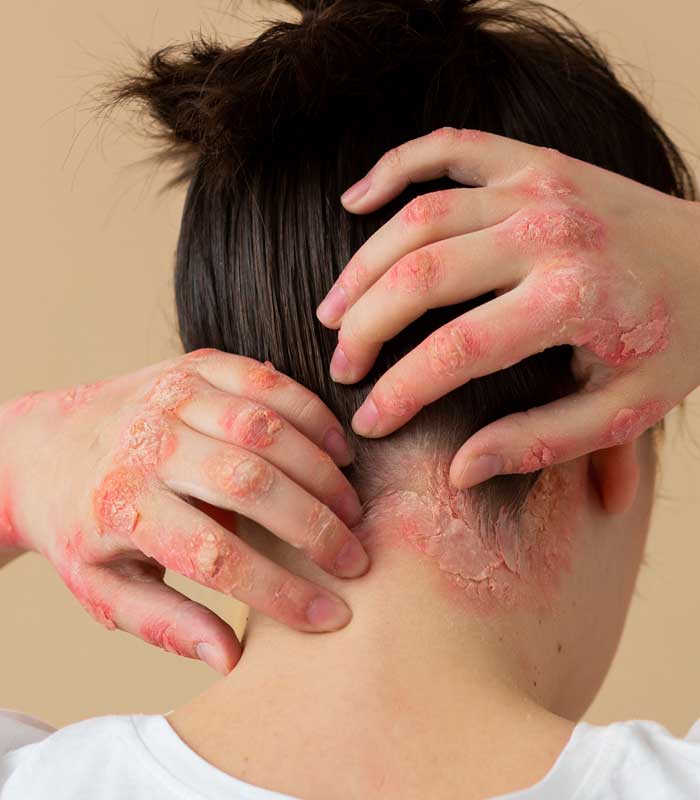
All types of eczema and psoriasis, from mild to severe are treated in Aesthetica Roots' Newtown, Saltlake and Rajarhat branches. This includes long-term inflammatory skin disorders like plaque psoriasis, guttate psoriasis, scalp psoriasis, atopic dermatitis, contact dermatitis, and others.
We can help you find the best way to treat your psoriasis and eczema.
Get the greatest psoriasis and eczema treatment with us!
How Does Psoriasis & Eczema Treatment Work?
At Aesthetica Roots, we employ a variety of strategies such as topical corticosteroids that lessen inflammation and itch, phototherapy that helps to prolong the cell growth cycle, immunosuppressants that inhibit the immune system, and biologic drugs that specifically bind to proteins that cause inflammation. Some of them are fast-acting to alleviate flare- ups, while the others are for long-term management of the disease. Every therapy is a step towards healing your skin barrier, lessening inflammation, and giving you intervals of clear and comfortable skin.
Why Choose Professional Psoriasis & Eczema Treatment?
Aesthetica Roots’ medical treatments are extensive and comprehensive in that they treat both immune dysfunction and skin barrier problems which are the root causes of Psoriasis and Eczema. Don't expect to get only temporary relief that merely covers up the symptoms; disease control that avert flare-ups is the real thing. Every treatment plan is tailored to your specific condition - whether it be plaque psoriasis, atopic dermatitis, or the like - and severity level. In the end, the quality of your life will improve as you are going to enjoy longer remission periods, less inflammation, and better overall well-being. Feel good, confident, and free as comfortable skin will allow you to be what you want and not worry about the visible patches.
Home Remedies vs. Professional Treatment
Local remedies and simple moisturizers may be able to offer brief relief, but they do nothing to correct the underlying immune dysfunction that results in psoriasis and eczema. A professional medical treatment at Aesthetica Roots will give you real disease control with very few flare- ups and long periods of clear skin. With continuous management, a lot of patients can have their symptoms disappear for months, even years. We offer professional therapy which involves advanced biologics, phototherapy, and systemic medications that operate at the immune level. Professional treatment demands dedication and willingness on your part, but along with it, you get the pain-free, itching-less, and embarrassment-free life that is of far greater value than what you invest.
Is Psoriasis & Eczema Treatment Safe?
Psoriasis and eczema treatment at Aesthetica Roots is safe provided that proper supervision is exercised. We use medications, phototherapy devices, and biologics that are all FDA-approved and have been put through extensive safety tests. Our dermatologists are experienced, well-informed, and competent in the treatment of chronic inflammatory skin diseases and, at the same time, they are vigilant about the possibility of side effects. Besides that, we provide you with all the information you need about your illness, treatment choices, and realistic expectations, as well as help you to recognize the signs that indicate immediate medical help.
TYPES OF PSORIASIS
Psoriasis presents in five main types: plaque psoriasis, guttate psoriasis, inverse psoriasis, pustular psoriasis, and erythrodermic psoriasis.
Plaque Psoriasis (Psoriasis Vulgaris):
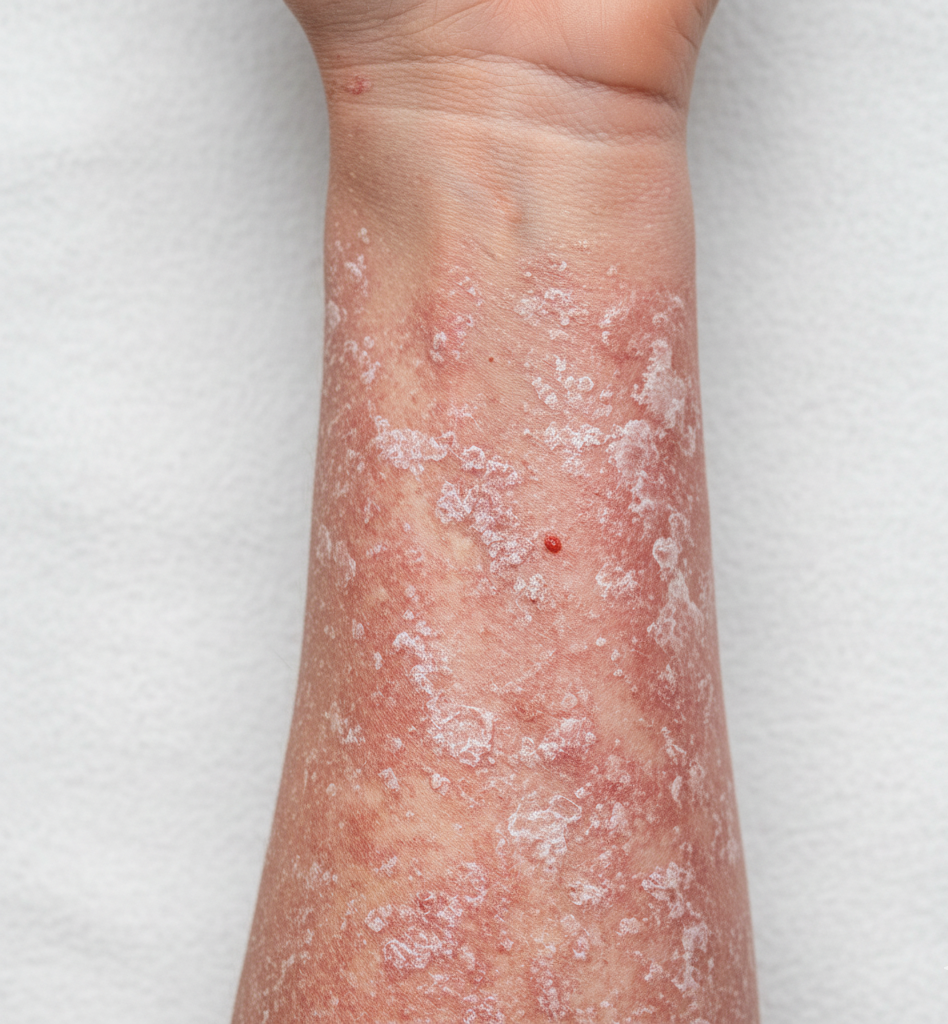
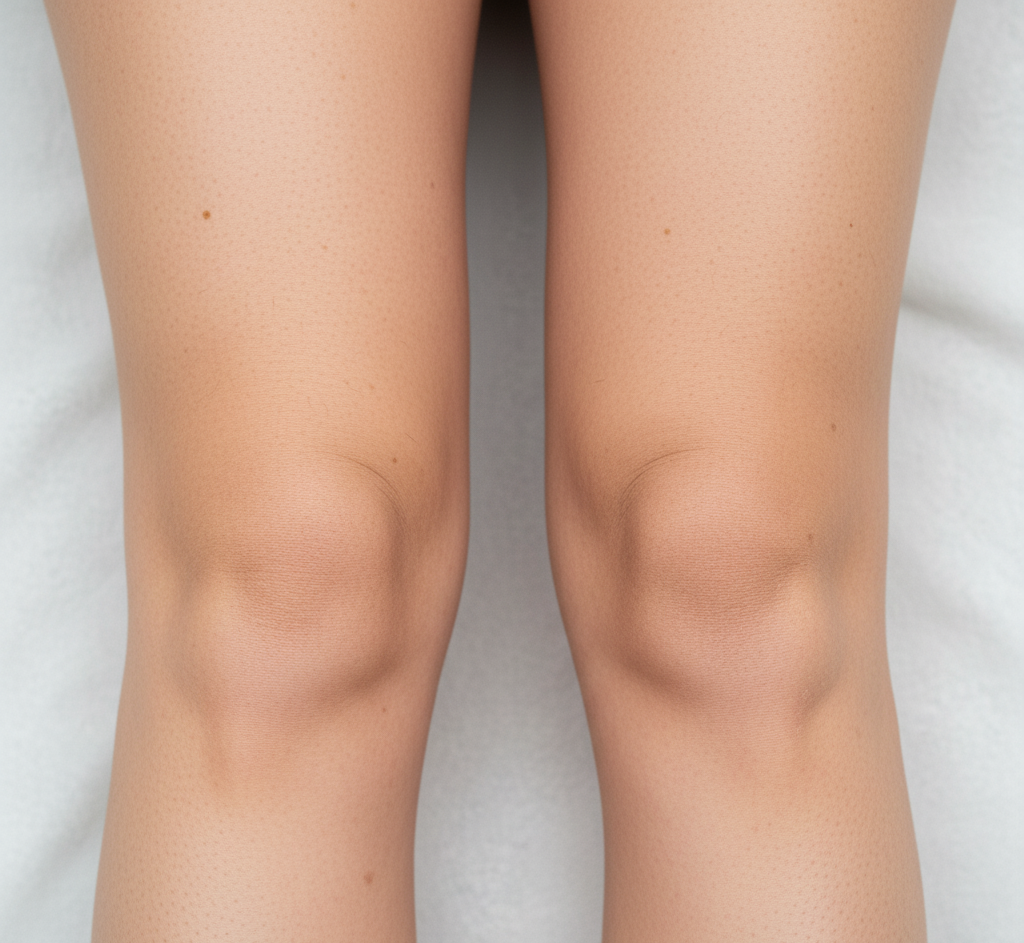
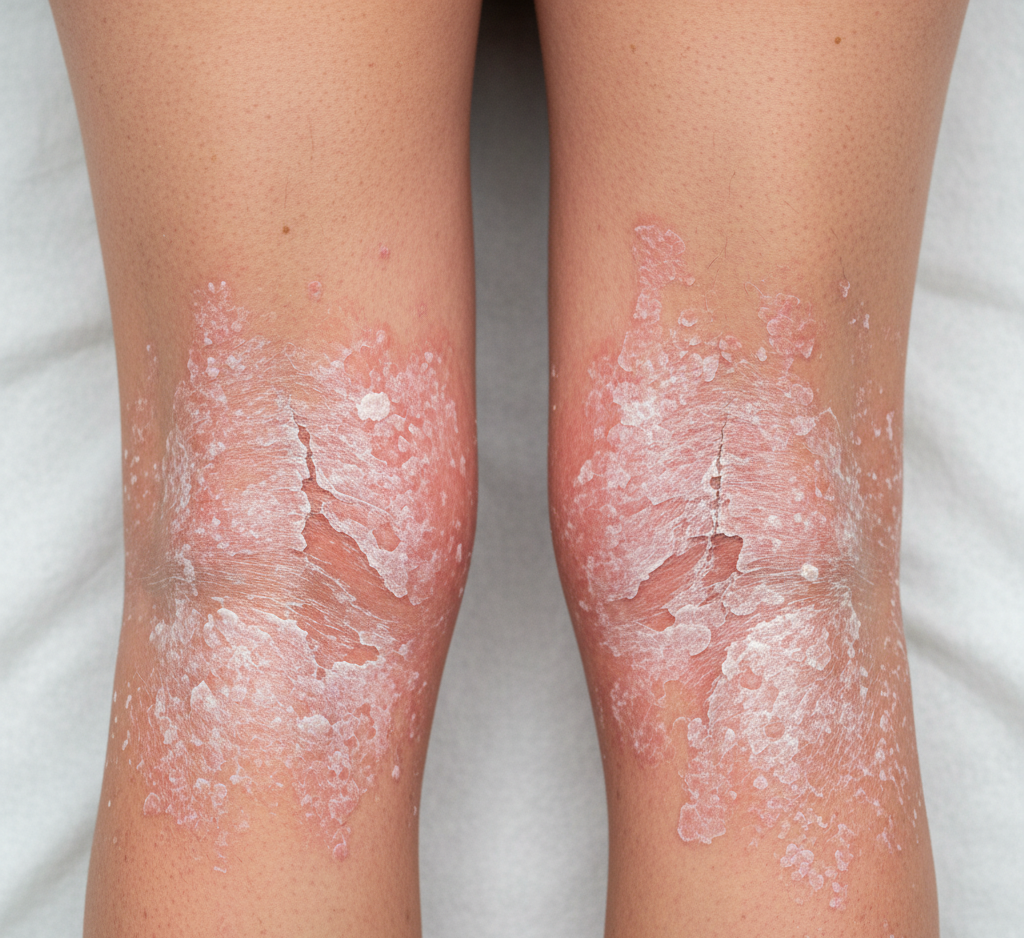
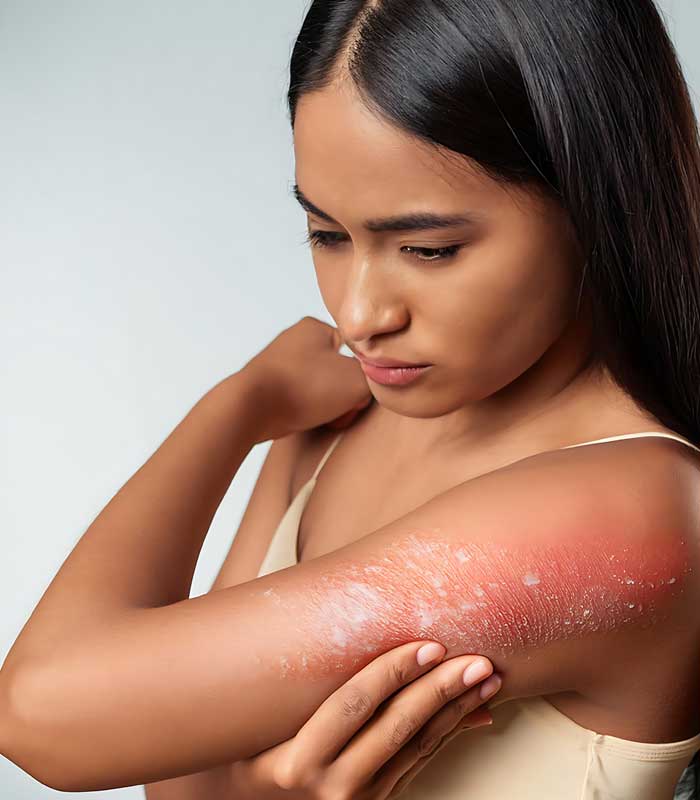
The most common form affecting 85-90% of people with psoriasis, presenting as raised areas of inflamed skin covered with silvery-white scaly skin. These plaques most commonly appear on the elbows, knees, scalp, and lower back. The patches can be itchy, painful, and may crack and bleed.
Guttate Psoriasis:
Characterized by numerous small, scaly, red or pink, droplet-like lesions (papules) that appear over large areas of the body, primarily the trunk, limbs, and scalp. Often triggered by streptococcal infection and is most commonly seen in children and young adults, typically occurring 1-3 weeks post-infection. About one-third of cases may develop into chronic plaque psoriasis later in life.
Inverse Psoriasis (Flexural Psoriasis):
Affects skin folds such as the armpits, groin, under the breasts, and between the buttocks. It causes large, smooth patches of inflamed skin that are worsened by friction and sweating, making it particularly uncomfortable in hot weather.
Pustular Psoriasis:
An uncommon type affecting only 3% of people with psoriasis, characterized by white sterile pustules (pus-filled bumps) surrounded by red or inflamed skin. Can be localized (affecting hands and feet in palmoplantar pustulosis) or generalized (covering most of the body), which is a serious condition requiring emergency treatment. May be accompanied by fever, chills, and severe itching.
Erythrodermic Psoriasis:
A rare form affecting only 2% of people with psoriasis, causing widespread redness and scaling over most of the body surface. This severe form can lead to protein and fluid loss, infection, and cardiovascular complications, and is considered a medical emergency.
Scalp Psoriasis:
Can occur as part of plaque psoriasis or independently. Ranges from mild erythematous scaly plaques to total scalp involvement, usually extending beyond the hairline.
Nail Psoriasis:
Mostly demonstrates as nail pitting, with other presentations ranging from oil drop discoloration and splinter hemorrhaging to crumbling or loosening of the nail plate. It is an important predictor for psoriatic arthritis..
TYPES OF ECZEMA
Eczema encompasses seven different types of inflammatory skin conditions that cause skin to become dry, itchy, flaky and bumpy.
Atopic Dermatitis (Atopic Eczema):
The most common type of eczema, characterized by dry, itchy, inflamed patches of skin. Typically develops in childhood and causes flare-ups throughout life, most often affecting the face, hands, feet, elbows, and knees. The skin may develop blisters, peel, crack, and bleed.
Contact Dermatitis:
Can develop after something damages the skin, including chemicals and frequent hand washing. Two subtypes exist: irritant contact dermatitis (from touching strong irritants) and allergic contact dermatitis (from touching allergens like nickel, poison ivy, or certain fragrances). The hands are especially vulnerable.
Seborrheic Dermatitis:
A chronic, relapsing form of eczema that usually appears on the scalp but can occur anywhere there are oil- producing sebaceous glands like the chest, groin, and nose Indian Journal of Dermatology, Venereology and Leprology. In babies it causes cradle cap, while in adults it commonly causes dandruff, appearing as flaky yellow or flesh-colored patches. The condition looks oily or waxy with significant scaling.
Dyshidrotic Eczema (Pompholyx):
Affects the hands and feet, with the first symptom being severe itching followed by blisters that give way to scaly patches weeks later. Deep cracks can appear on the hands or fingers, making this type chronic and painful.
Nummular Eczema (Discoid Eczema):
Characterized by coin-shaped spots of irritated, itchy skin that can become crusty or scaly, often mistaken for ringworm due to their similar appearance. More common in men over 55 years old, appearing most often on arms, legs, hands, feet, and torso.
Neurodermatitis (Lichen Simplex Chronicus):
Causes a skin outbreak that doesn't typically grow bigger but worsens from scratching, with irritated skin becoming thick and deeply wrinkled. People may scratch during the day without realizing it or while asleep.
Stasis Dermatitis:
Develops when veins in the lower legs don't properly return blood to the heart. Can cause weeping and crusting of the skin initially, and over time leads to brown stains on the lower legs. Associated with venous insufficiency and poor circulation.
CAUSES OF PSORIASIS
Psoriasis occurs when skin cells are replaced more quickly than usual, which may be caused by a problem with the immune system, perhaps due to genetics or environmental triggers.
Immune System Dysfunction:
In people living with psoriasis, the immune system is triggered and activated, acting as though there are harmful pathogens attacking the body. An overactive immune system sends faulty signals that mistake healthy cells for harmful ones, resulting in too much inflammation and rapid production of more skin cells than necessary.
Genetic Factors:
If one parent has psoriasis, a child has about a 28% chance of developing it; if both parents have psoriasis, a child has approximately a 65% chance. Many gene locations are associated with psoriasis, involving genes related to antigen presentation, the IL-23 axis, T-cell development and polarization, innate immunity, and negative regulators of immune responses. The HLA-Cw6 gene is strongly associated with psoriasis, especially guttate psoriasis.
Environmental Triggers:
Common triggers include skin injury (cuts, scrapes, insect bites, sunburn - known as the Koebner response), certain medications (lithium, antimalarial medicines, ibuprofen, ACE inhibitors), throat infections, stress, smoking, heavy alcohol consumption, and cold weather.
Infections:
There is a connection between streptococcal infection (strep throat) and guttate psoriasis, as it often triggers the first onset in children. Other infections like ear infections, bronchitis, tonsillitis, or respiratory infections can also trigger flares.
Stress and Lifestyle Factors:
For those with psoriasis, stress can sometimes trigger inflammation and may cause symptoms to appear, reappear, or worsen. Obesity, smoking, and excessive alcohol consumption are also contributing factors.
CAUSES OF ECZEMA
While the exact cause of eczema is unknown, researchers know that people develop eczema because of a combination of genes and environmental triggers.
Skin Barrier Dysfunction:
In about 10% of the population, the epidermal differentiation gene is faulty, and this gene is faulty in more than 50% of people with atopic dermatitis. Approximately 40 mutations in the FLG gene have been identified in people with atopic dermatitis, leading to production of an abnormally short profilaggrin molecule that cannot be cleaved to produce filaggrin proteins. This shortage impairs the skin's barrier function, allows excess water loss, and makes the skin vulnerable to allergens and irritants.
Immune System Dysfunction:
Interleukins IL-4 and IL-13, detected in atopic dermatitis lesions, lead to decreased expression of filaggrin in keratinocytes. The overactive immune response in eczema creates inflammation that further damages the skin barrier.
Genetic Predisposition:
Some people with eczema have a mutation of the gene responsible for creating filaggrin, a protein that helps maintain a healthy, protective barrier on the top layer of the skin. A family history of eczema, hay fever, or asthma is a major factor contributing to the risk of these diseases. Eczema is frequently accompanied by other atopic conditions such as asthma, allergic rhinitis, and food allergies. A defective skin barrier is the most likely cause because allergens can penetrate the skin, thus leading to sensitization and allergic reactions. Other triggers besides the above mentioned include irritants (soaps, detergents, chemicals), low humidity, temperature extremes, stress, hormonal changes, and certain foods.
Seborrheic Dermatitis Specific Causes:
The trigger for seborrheic dermatitis is usually an inflammatory reaction to excess Malassezia yeast on the skin, combined with genes, stress, chemical irritants, and dry, cold weather causing the skin to overproduce oil Indian Journal of Dermatology, Venereology and Leprology.
Comprehensive Treatment Areas
Full Body Psoriasis Treatment
We first eliminate the disease all over your body. The most complicated areas are what we treat intensively. Plaque psoriasis on your elbows, knees, scalp, and lower back is part of our holistic treatment approach - in short, wherever those red, scaly patches are, we treat. Each and every one of your treatments is tailored to the intensity and the spot of your psoriasis. Depending on the treatment type and the affected areas, the duration of each session is usually between 30 and 60 minutes. Although it depends on how severe your condition is, we advise you to start 8-12 sessions to get the best results. Our treatments are suitable for mild cases with a few patches and severe ones where large areas of the body are affected.
Scalp Psoriasis Treatment
Scalp psoriasis is a source of annoyance mainly because it can be seen and can go beyond the hairline. We treat scalp psoriasis only with a specially designed phototherapy, some medicated shampoos, and topical treatments that are made to go deep into the hair. Most of the patients obtain the result within 6-10 sessions, with reduced flaking, itching, and redness. We are located at New Town, Salt Lake, and Rajarhat so that you can choose the most convenient place for your treatment.
Nail Psoriasis Treatment
Nail psoriasis is the pitting, discoloration, thickening, or in extreme cases, separation of the nail from the nail bed. The situation is extremely difficult to treat, but we have adopted targeted methods such as topical medications that are applied directly under and around nails, intralesional injections for the most severe cases, and phototherapy. Treatment requires a lot of patience - nails grow slowly - but you will notice a gradual improvement after several months. In addition, we provide guidance for nail care so as not to incur further damages.
Inverse Psoriasis Treatment
Inverse psoriasis is the one that affects skin folds - armpits, groin, under the breasts, between the buttocks. These areas are very sensitive and are affected by friction and moisture, therefore treatment is difficult. We use gentle, specially formulated topical treatments that do not irritate these delicate areas. The emphasis is on reducing inflammation and at the same time, the area is kept dry and comfortable. Most of the patients recover through 4-8 weeks of continual treatment.
Guttate Psoriasis Treatment
The main symptoms of guttate psoriasis are small, drop-shaped spots on the trunk, arms, and legs, which is usually the result of a strep infection We treat this type of disease with phototherapy, which is especially effective for these tiny lesions occurring all over the body, and also pairing with topicals if required. Plenty of cases calm down significantly or even clear up completely when properly treated; however, there is a possibility of chronic plaque psoriasis later.
Pustular and Erythrodermic Psoriasis Treatment
These are the most serious types, and therefore require intervention at the earliest. Excess pus-filled bump pustular psoriasis along with extremely red and additionally scaling erythrodermic psoriasis are examples of the cases that need non-stop treatment. We make use of systemic drugs, biologics, and at time, hospitalization for the cases that are severely experienced. Such occurrences are medical emergencies, and hence we move forward with complete management to bring them under control as soon as possible.
Full Body Eczema Treatment
We at Aesthetica Roots, cure eczema wherever it may be on your body. Atopic dermatitis affecting the arms, legs, and torso is given full treatment by our mix of topical therapies, phototherapy, and when necessary systemic medications. Every session is an intervention in inflammation, itching, and skin barrier damage. Usually, treatment involves 8-12 sessions at the start and then maintenance therapy for the prevention of flare-ups.
Facial Eczema Treatment
Face eczema is the main factor that causes the most psychological distress in the patient as it is the most visible component. We use gentle treatments that are safe for facial skin - lower-potency topical medications, calcineurin inhibitors that do not thin the skin, and cautious phototherapy. Additionally, we address the triggers such as cosmetics and environmental factors. The majority of people see their facial eczema alleviating significantly within 4-6 weeks and the progress keeps going over time.
Hand and Foot Eczema Treatment
Hands and feet eczema (dyshidrotic eczema) bring about those agonizing blisters and cracks that make routine work quite difficult. These body parts are our target for high-potency topical treatments, phototherapy focused on the hands and feet, and barrier repair therapy for mending those deep cracks. Specific instructions for hand care and protection will be given to you. Usually, the time for improvement is 6-10 sessions; however, the relief is worth it.
Scalp Eczema and Seborrheic Dermatitis Treatment
Seborrheic dermatitis affecting the scalp is the cause of flaking, itching, and oily patches - it is basically stubborn dandruff that refuses to go away. We give the following treatments to the patient: Medicated shampoos, topical antifungals (as it is related to the yeast overgrowth), and anti-inflammatory treatments. The majority of the people find major relief in 3-4 weeks. Besides that, a maintenance routine is given to you to prevent the recurrence of the condition.
Contact Dermatitis Treatment
Contact dermatitis develops when an irritant impacts your skin or when an allergen causes a reaction. Our first step is locating the trigger (nickel, fragrances, latex, chemicals at the workplace), then we deal with the current infection through the use of topical steroids and barrier repair, and finally, we assist you in staying away from future exposures. Normally, treatment is a short-term one - 2-4 weeks - after which we have recognized and removed the trigger.
Chronic Eczema and Lichenified Skin Treatment
Prolonged eczema may lead to your skin becoming thick, leathery, and deeply-lined (lichenification) due to incessant scratching. Such difficult cases require more aggressive treatment - drugs of higher potency, occlusive wraps to facilitate penetration, and sometimes, intralesional injections for very thick areas. Besides that, to break the itch-scratch cycle we also use behavioral strategies. The chronic cases that we talk about here take longer - usually 3-6 months - however, our impact on even the most stubborn areas can be quite significant.
Pediatric Psoriasis and Eczema Treatment
Children with psoriasis or eczema should be given special attention. We employ age-appropriate treatments - more gentle medications, shorter phototherapy sessions using kid-friendly equipment, and a lot of educating the parents concerning the triggers and prevention. The team we have is skilled in the treatment of children from babies to teenagers. We make sure that the treatment is comfortable and quick as we know that it is hard to keep kids still. The majority of pediatric cases are responsive to treatment, and a great number of children get rid of their eczema as they grow.
Combination Psoriasis and Eczema Treatment
There are some people who have both diseases and/ or have family members that have different diseases. We come up with the personal treatment plans that deal with different inflammatory skin diseases simultaneously. By using our comprehensive approach, you are able to get all your treatments done in one place with one team which understands the full picture of your skin health. We work with you to combine your treatments so that they enhance each other and do not interfere.
Our Top-Notch Acne & Pimples Treatment
- Advanced Treatment Technology: Latest medical therapies and new skin treatment processes for efficient acne control.
- Root Cause Targeting: Holistic treatment of hormonal imbalance, lifestyle problems, and bacterially caused acne.
- Long-term Results: Gradual improvement in clear skin, if the right treatment procedures and skin routines are followed.
- Minimal Side Effects: Advanced treatment techniques to ensure comfortable experience with minimal downtime.
- All Skin Types: All-in-one safe and efficient treatments for varied skin colours and severities of acne.
2,000
Happy Patients
6
Qualified Doctors
4
Clinic Rooms
10
Local Partners
Why Choose Aesthetica Roots for Psoriasis & Eczema Treatment? Advanced Technology and Safety
Opening Hours:
We are open to help with your skin and hair care needs. Visit us during our working hours or book an appointment anytime.
| Every Day | - | 10:00 AM - 7:30 PM |
Results and expectations
Our psoriasis and eczema treatments are designed to provide:
- Gradual, long-term symptom reduction and flare-up prevention over the course of treatment sessions
- Healthier, more comfortable skin with reduced inflammation, itching, and scaling
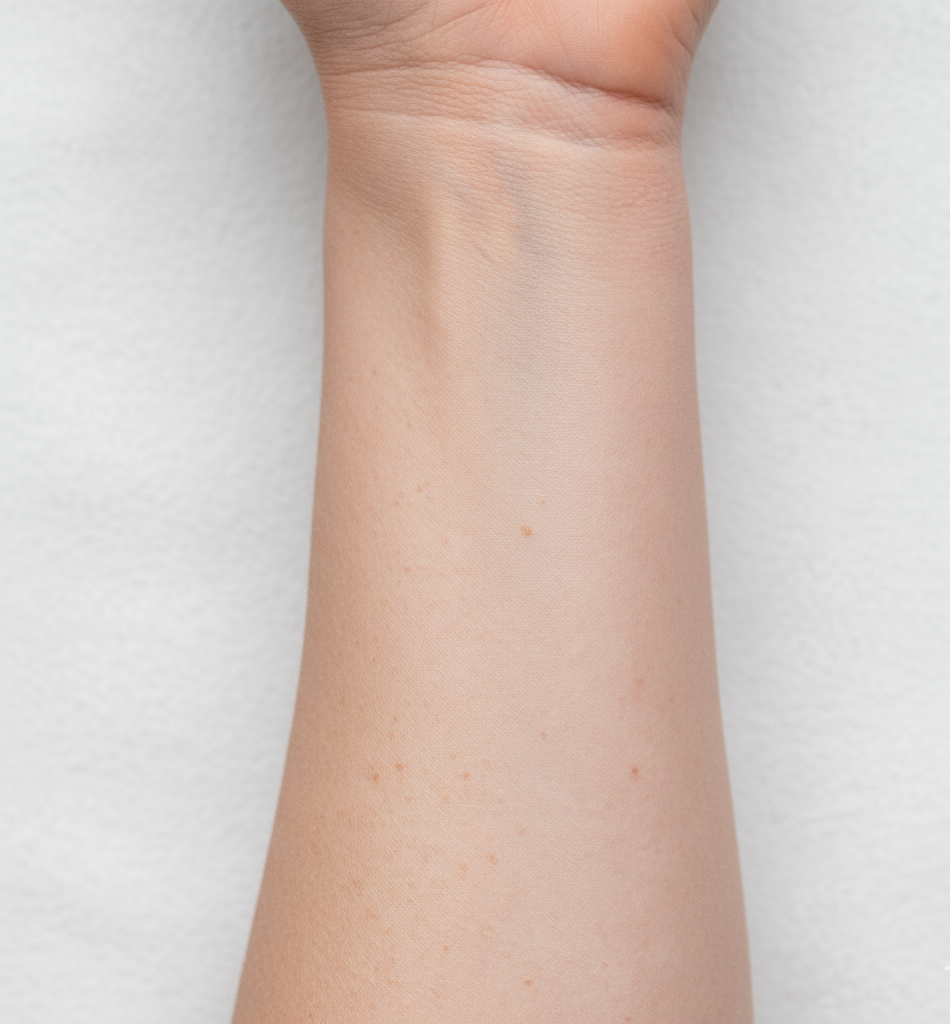
- Long-lasting results with significant improvement in skin appearance and texture after complete treatment cycle
- Improved skin confidence and quality of life with proper maintenance protocols and ongoing support
Aesthetica Roots serves patients from across the greater Kolkata region that includes Saltlake, Newtown and Rajarhat. We offer full access to premium psoriasis and eczema treatment solutions. Aesthetica Roots gives customers the best professional dermatological and aesthetic care for chronic skin conditions such as psoriasis and eczema.
Before After